
July 8, 2015 – August 8, 2015
WE ARE PUSSY RIOT
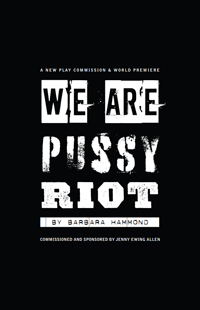
A New Play Commission by Barbara Hammond
Directed by Tea Alagić
WORLD PREMIERE
Commissioned and Sponsored by Jenny Ewing Allen
 In February 2012, five young women walked into the Church of Christ the Savior in the center of Moscow and offered up a punk prayer to the Mother of God—“Virgin Mary, Chase Putin Away!” The young activists, who call themselves Pussy Riot, played and shouted for exactly 48 seconds before being dragged out of the church by security guards and sent home. That night they uploaded a video of their performance to YouTube, and within hours became enemies of both Church and State. The girls were arrested, tried, and sent to labor camps for hooliganism and inciting religious hatred. But unlike dissidents from Soviet times, the Western media machine took hold of the story and turned Pussy Riot into the greatest piece of performance art in Russian history. This is their story.
BARBARA HAMMOND
Barbara Hammond is a New Dramatists resident playwright (Class of2018) and currently under commission from both the Royal Court Theatre and the Contemporary American Theater Festival.
Awards: 2014 Seven Devils Theatre Conference; the 2012 Helen Merrill Distinguished Playwright Award; 2010-2014 Yale Playwrights Festival mentor; a 2011 Edward Albee Foundation Fellow; a Tyrone Guthrie Centre repeat resident in Annaghmakerrig; finalist at the Tennessee Williams One-Act Play Festival and the Kerouac Project; Special Jury Award, First Irish 2009 Theatre Festival. She is a member of ASCAP and the Dramatists Guild, and was named one of the Influential Women of 2011 by the Irish Voice.
Film: Directors’ Award, San Francisco International Shorts Festival and June Weddings with Tom Noonan and Elzbieta Czyzewska.
Supported, in part, by Grants from the Laurents/Hatcher Foundation, the National Endowment for the Arts, and the Venturous Theater Fund of the Tides Foundation.
Marinoff Theater, Center for Contemporary Arts/II, 62 West Campus Drive
Run time: 100 minutes
Contains graphic language. For mature audiences only.
CAST
Nadya…Libby Matthews*
Masha…Liba Vaynberg*
Katya…Katya Stepanov*
Female Roles…Sarah Nealis*
Sergei/Putin/Male Ensemble…T. Ryder Smith*
Guard/Male Ensemble…Cary Donaldson*, Adam Phillips
Female Ensemble…Allyson Malandra*, Keyla McClure, Brianne Taylor
*Actors’ Equity Association
CREATIVE TEAM
Set Designer Peter Ksander
Costume Designer Trevor Bowen
Lighting Designer D.M. Wood
Sound Designer Elisheba Ittoop
Video/Projection Designer Matthew Haber
Technical Director Josh Frachiseur
Production Stage Manager Deb Acquavella
INTERVIEW WITH PLAYWRIGHT BARBARA HAMMOND
Researched, interviewed and edited by Sharon J. Anderson, CATF Trustee/Professional Story Listener and Creative Director
CATF: Why Pussy Riot?
BH: Pussy Riot hit a nerve, not only in Russia but also, maybe even more so, in the West. They are contemporary artists posing as a feminist punk band. One of the brilliant things about Pussy Riot is that they are so outrageous and kind of “bad” at what they do – and I mean that as a compliment – no one but themselves could have thought of it. The CIA would never have orchestrated something as original as Pussy Riot.
CATF: It’s an irony that Pussy Riot is homegrown.
BH: Yes, absolutely. I was also attracted to them because they are girls. I like calling them girls. There’s something playful, even innocent, about their actions, though they are obviously very intelligent and at least two of them are mothers. “Girls” is a good word that has been taken away from us.
CATF: They’re like Pippi Longstocking or Scout from To Kill A Mockingbird?
BH: Well, I think they’re in the tradition of young women who stand out because they don’t behave like young women are told to behave.
Kathleen Hanna – one of the founders of the Riot Grrrl Movement which happened in the 90s in the northwest United States and influenced Pussy Riot – said, “Women make natural anarchists and revolutionaries because they’ve always been second-class citizens, having to claw their way out.” It’s true — we have Joan of Arc, Mary Magdalene and Malala Yousafzai . . . people respect and gravitate toward women who speak their minds. These women often pay a heavy price for that attention (like being burnt at the stake or labeled a whore) but they are often admired and celebrated.
Women’s power in their own culture, in any human culture on earth, has a complicated history. Women can make a claim to be outsiders in their own countries, since they rarely wrote their founding documents, or fought the wars that determined borders, or won the elections that determined the nation’s shape and values. I appreciate looking at the world from the outside. Outsider status can be a luxury.
CATF: How does a play, specifically, enlighten the story of Pussy Riot in a way a documentary or another genre can’t?
BH: Each audience member will answer this for themselves after they see this play. “Pussy Riot: A Punk Prayer” was a great documentary that reports what happened in Moscow in 2012 and tells its story with video and images and quotes. In my play, I’m moving beyond the news story — I’m using the story of Pussy Riot to examine an aspect of our culture.
CATF: Are you writing a play about Pussy Riot the way Pussy Riot would?
BH: No. Pussy Riot wouldn’t write a play — Pussy Riot’s actions are spontaneous, public and often get them arrested.
CATF: You want us to be Pussy Riot, don’t you?
BH: I want you to ask yourselves if you are or not.
CATF: But the name of your play is, “We Are Pussy Riot…. It’s not “Are We Pussy Riot?”
BH: I would say, and I think they would say, we CAN all be Pussy Riot — and if we’re not, why aren’t we? Are we happy with the status quo? Do we value order and tradition more than self-expression? They are all questions worth asking. One of my working titles for the play was, “We Are All Pussy Riot.” Another was “Everything is PR.”
The acronym PR is perfect for Pussy Riot. “Public Relations” is just another word for Propaganda. Pussy Riot self-consciously made themselves undeniable, first of all, with their name. If they had called themselves “Feminists Against Putin” we would never have heard of them. “Everything is PR” still might be the best title for this play.
CATF: Describing the lessons of Anna Akhmatova’s art, the poet Joseph Brodsky said: “The comprehension of personal drama betters one’s chances of weathering the drama of history.” Have you comprehended the metaphysics of your personal drama?
BH: You should read my Eva Trilogy. I could not have written “We Are Pussy Riot” without having written “The Eva Trilogy.” I heard a war correspondent I know tell a young journalist that the suffering in the world won’t make sense to you until you can access and have compassion for your own suffering. It’s understandable to run away from it. It is not something where you suddenly go, “Ah-ha! Now I understand my personal drama.” It unfolds throughout one’s life.
CATF: The documentary “Pussy Riot: A Punk Prayer” opens with this quote from Bertolt Brecht: “Art is not a mirror to reflect the world, but a hammer with which to shape it.” How does this contrast with this quote from John Updike: “Art begins with a wound. Art is an attempt to learn to live with the wound.”
BH: I would word it differently than either one and say the purpose of art is to expose the wound. You expose the wound and then it’s up to the participant in the art whether they are going to live with it or smash it. I don’t think the artist is holding the hammer. The audience decides what they want in their hands. They can have a scalpel or a hammer – or a tourniquet. My job is to expose the wound.
CATF: During the 48 seconds those members of Pussy Riot performed at the altar in Moscow’s Cathedral of Christ the Savior, they sang this: “Shit! Shit. It’s God’s shit!” Is shouting/singing that in a church appropriate?
BH: I don’t think they would have done it if it was appropriate — so no, it was absolutely inappropriate!
CATF: In the documentary, one of the members of Pussy Riot said that talk and compromise get you nowhere, only riot and revolution.
BH: I believe whichever member of Pussy Riot said this was referring to the totalitarian state in which she lives. Sometimes talk and compromise can get you somewhere. Riot and revolution, too, have gotten people places. The United States, for example, wouldn’t exist if we hadn’t had a revolution.
CATF: Flannery O’Connor, a devout Catholic, said, “I have found that violence is strangely capable of returning my characters to reality and preparing them to accept their moment of grace. Their heads are so hard that almost nothing else will work.” Is the “in-your-face” strategy of Pussy Riot a form of verbal violence?
BH: A cousin who plays piano in a chamber choir watched the Pussy Riot video and afterwards sent me an email: “I’m an atheist, but I love choral music and it killed me to listen to Pussy Riot destroy Rachmaninoff in a loud ugly punk mash-up. It killed me.” There are many legitimate reactions to what Pussy Riot did in that cathedral. Pussy Riot brought attention to the fact that the head of the Russian Orthodox Church stated that Putin is a “miracle of God” and that believer should vote for him. I believe that the girls did not intend to hurt the feelings of believers. Maybe they didn’t care about those feelings, but the message they were sending was intended as a political statement, not a statement against the Orthodox faith.
CATF: You said once, “I used to get joy from freedom, and now I find it in intimacy.” How would members of Pussy Riot respond to this?
BH: Give them 20 years and see what they say.
CATF: You end a piece you wrote entitled “How to Stay a New York Playwright” with this: “Now close your eyes again, envision a stage, and watch someone walk on from stage left. Get that pencil and write down what she says.” My last question to you: Close your eyes, someone is walking on from stage left. What is she saying?
BH: “Why can’t it always be like this?”
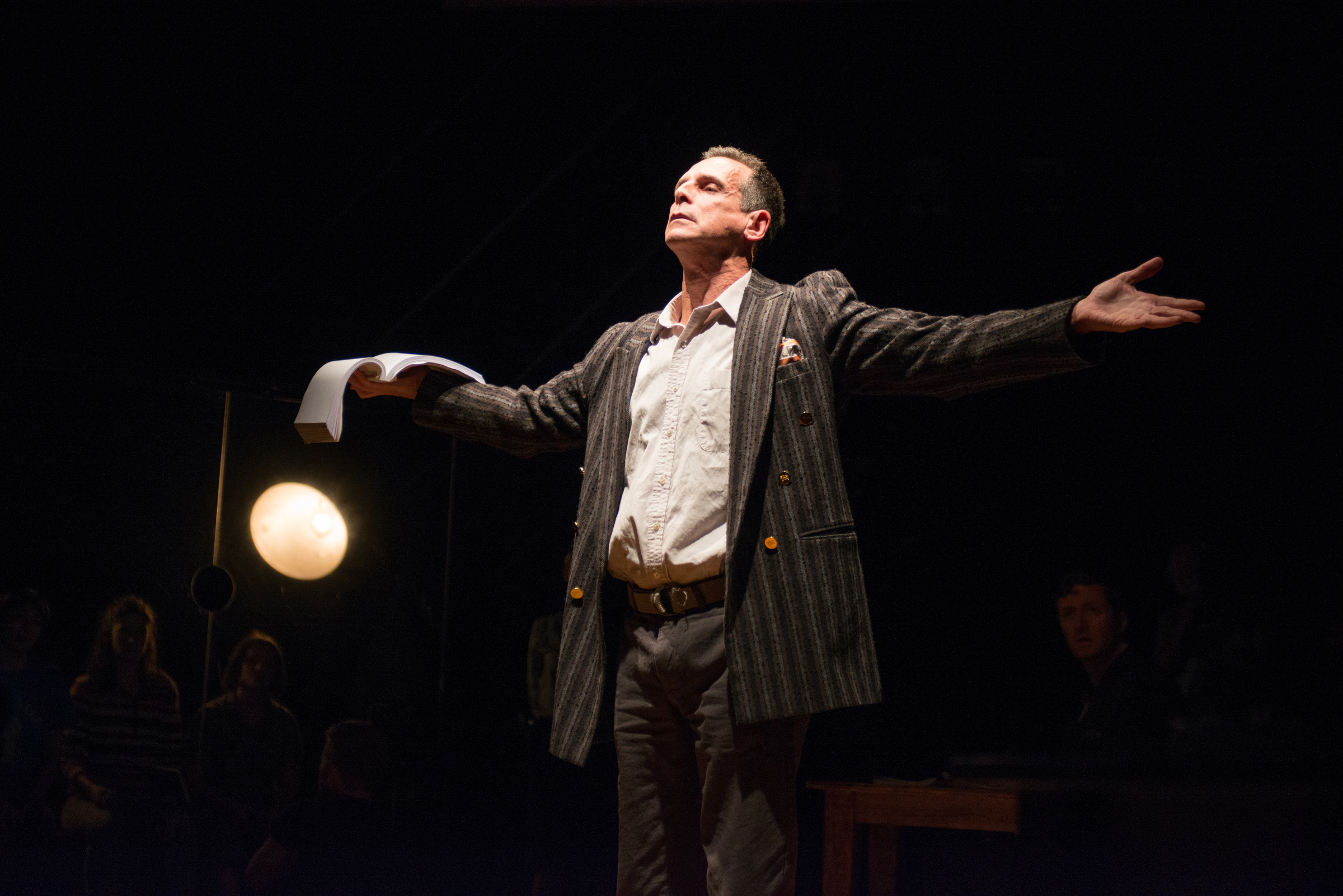
T. Ryder Smith as Prosecutor • WE ARE PUSSY RIOT by Barbara Hammond • CATF 2015 • Photo by Seth Freeman
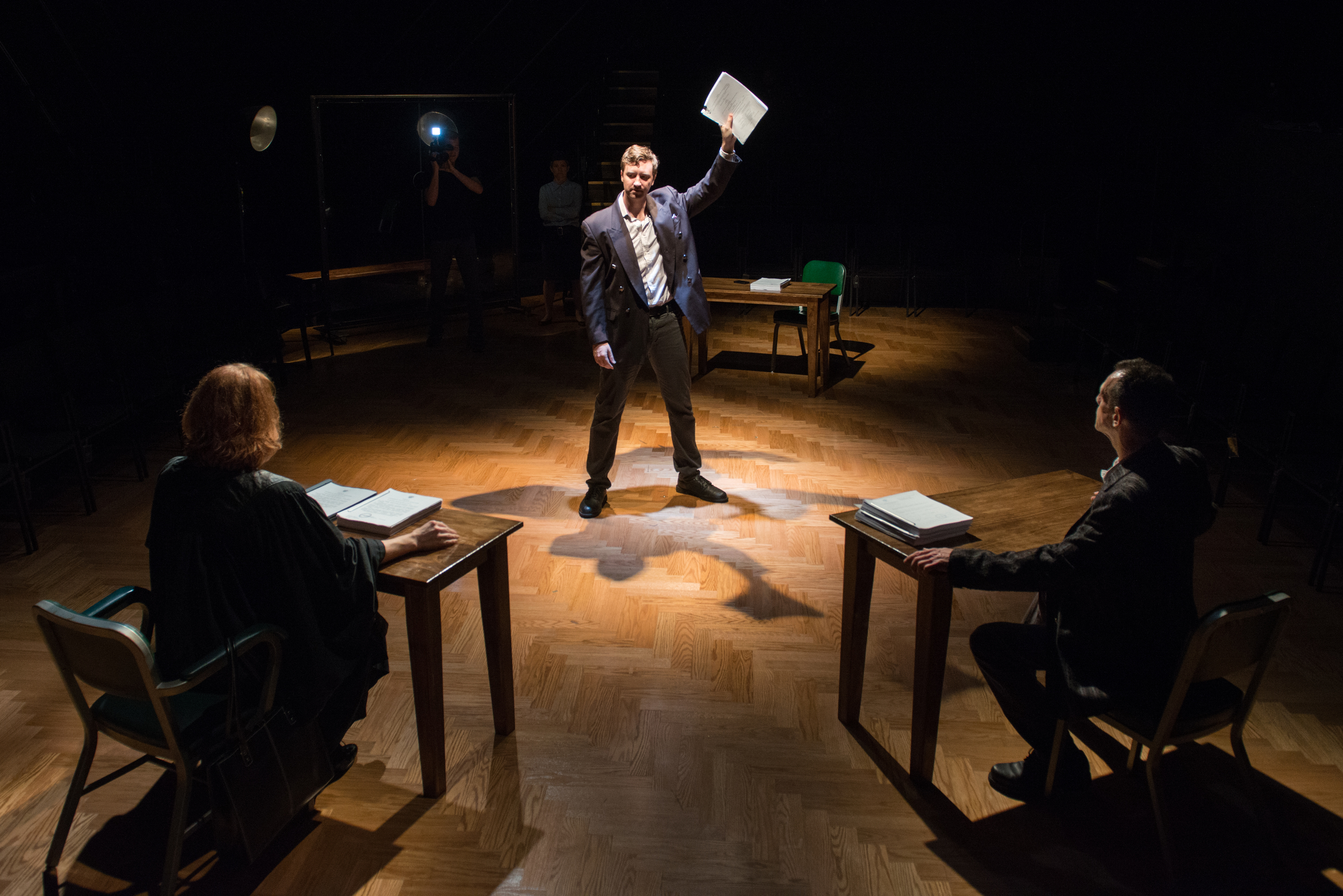
Cary Donaldson as Defense, Sarah Nealis as Judge and T. Ryder Smith as Prosecutor • WE ARE PUSSY RIOT by Barbara Hammond • CATF 2015 • Photo by Seth Freeman
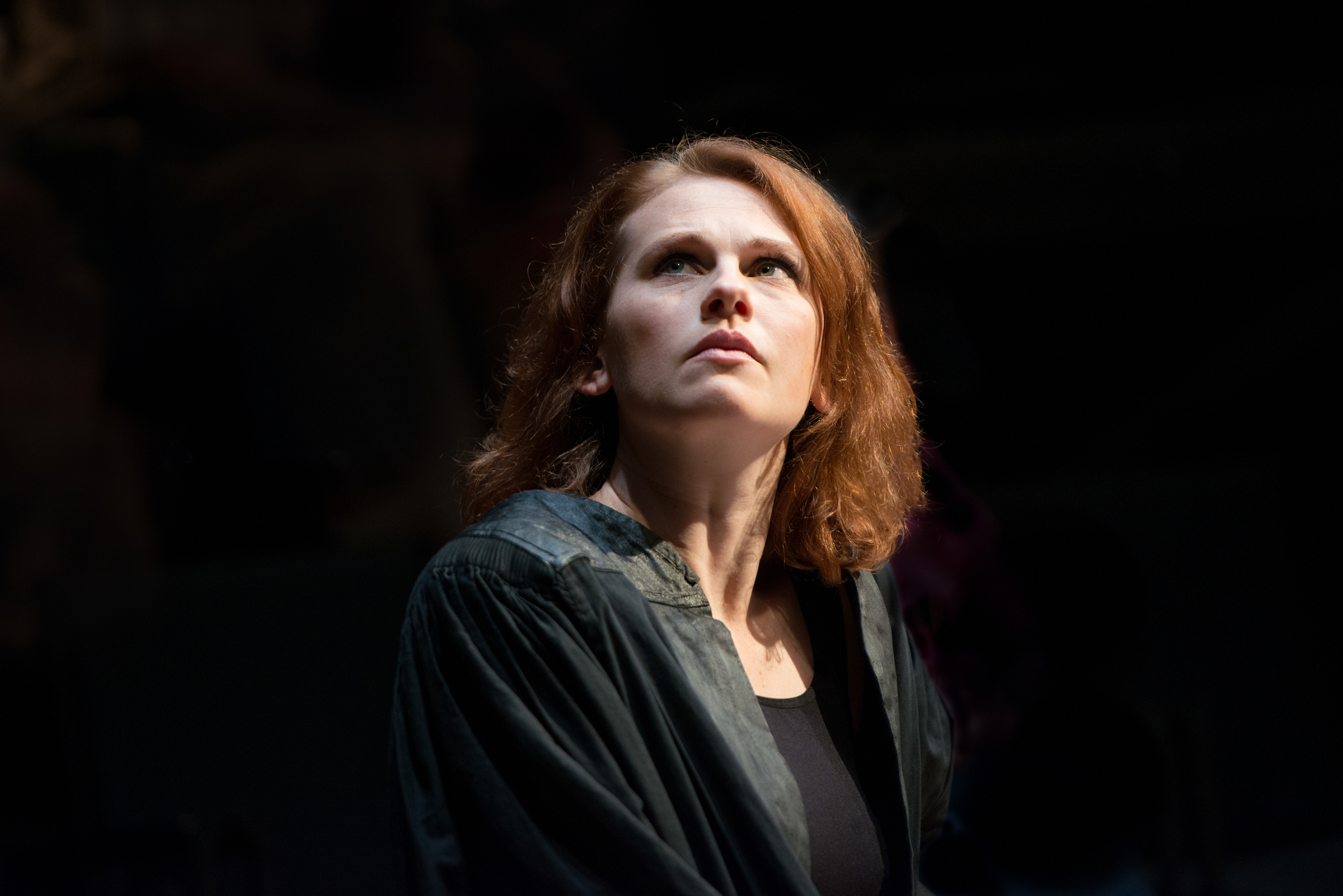
Sarah Nealis as Judge • WE ARE PUSSY RIOT by Barbara Hammond • CATF 2015 • Photo by Seth Freeman
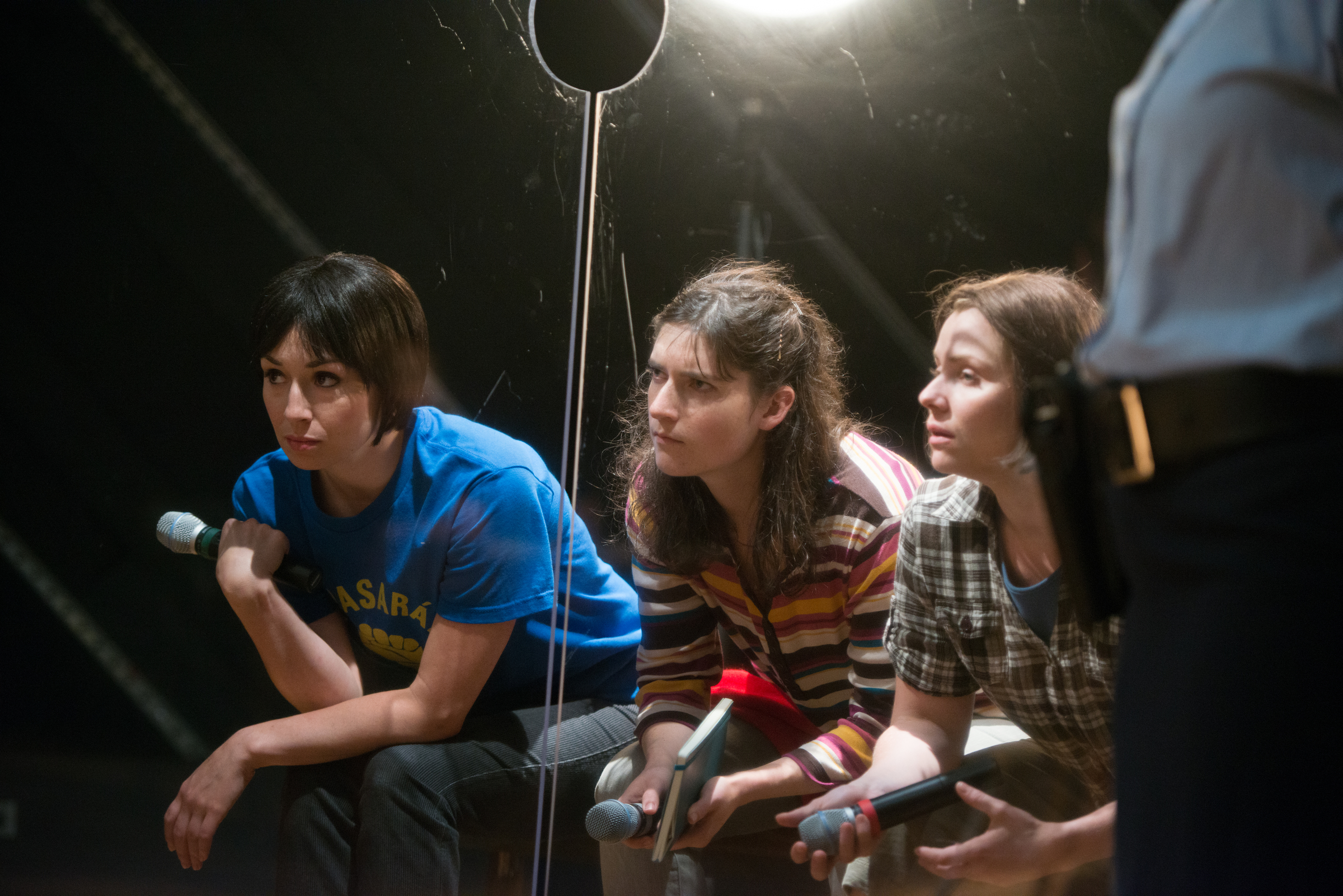
Libby Matthews as Nadya, Liba Vaynbeg as Masha, Katya Stepanov as Katya • WE ARE PUSSY RIOT by Barbara Hammond • CATF 2015 • Photo by Seth Freeman
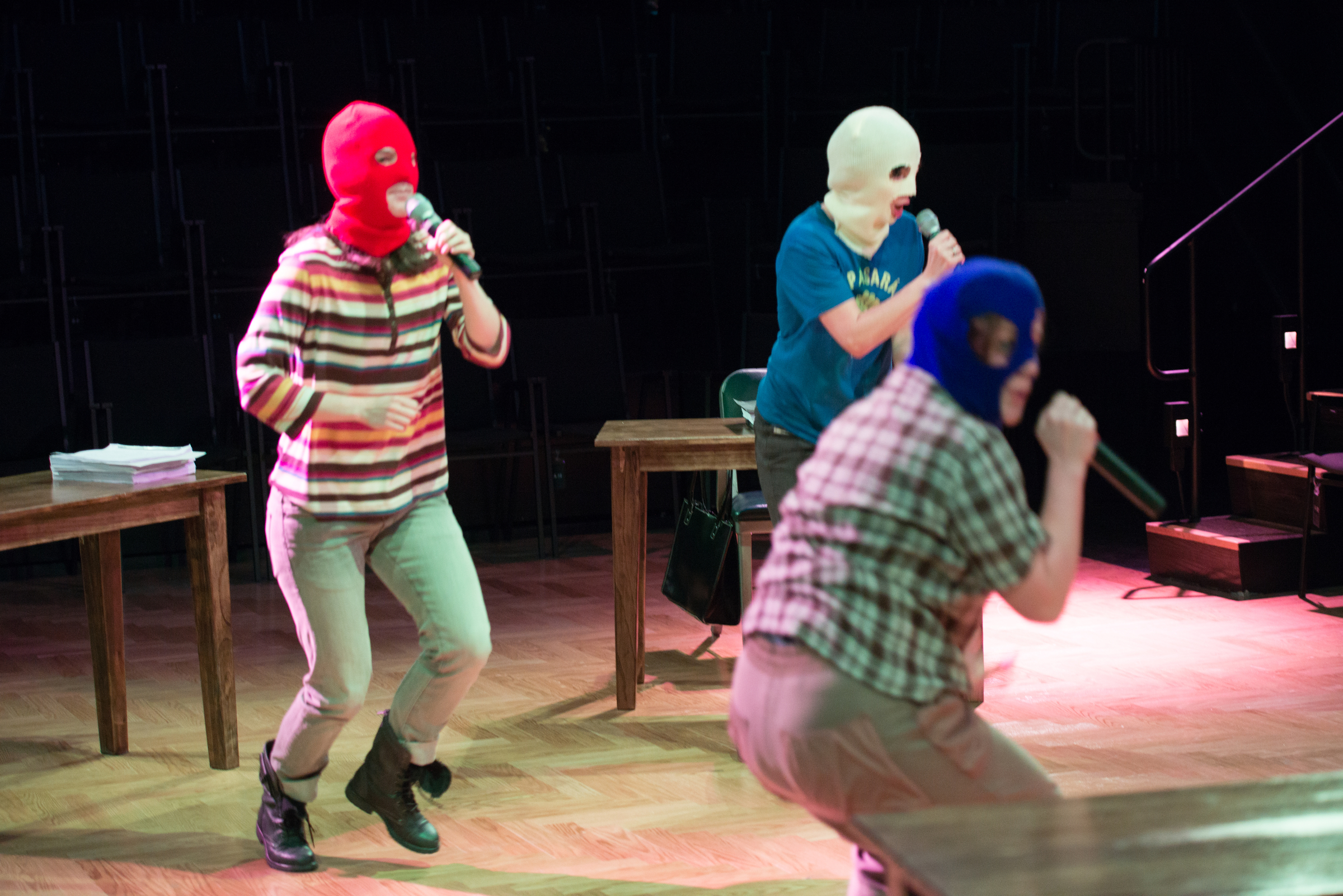
(clockwise from left): Liba Vaynberg as Masha, Libby Matthews as Nadya, Katya Stepanov as Katya • WE ARE PUSSY RIOT by Barbara Hammond • CATF 2015 • Photo by Seth Freeman
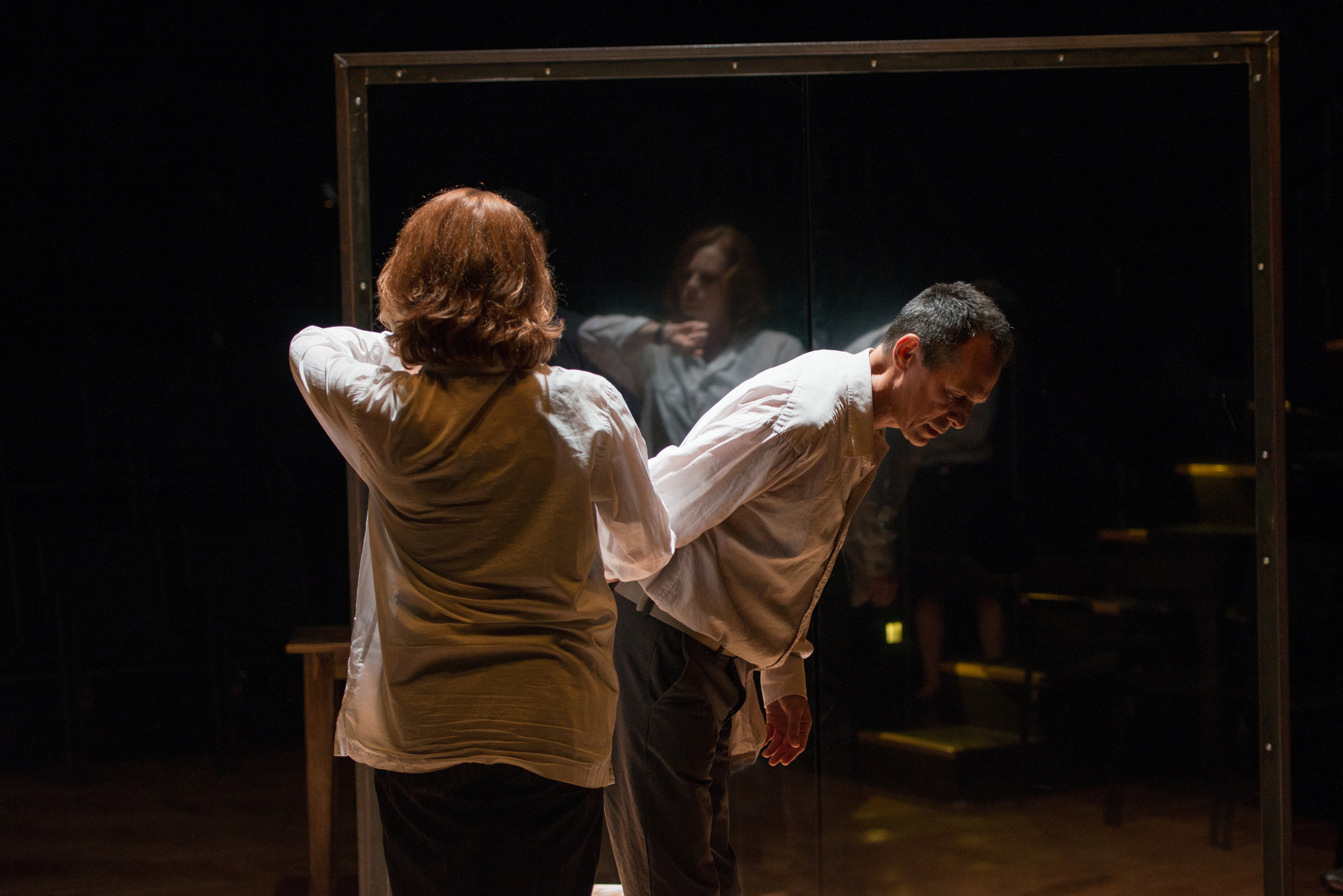
Sarah Nealis as Anna, T. Ryder Smith as Sergey • WE ARE PUSSY RIOT by Barbara Hammond • CATF 2015 • Photo by Seth Freeman
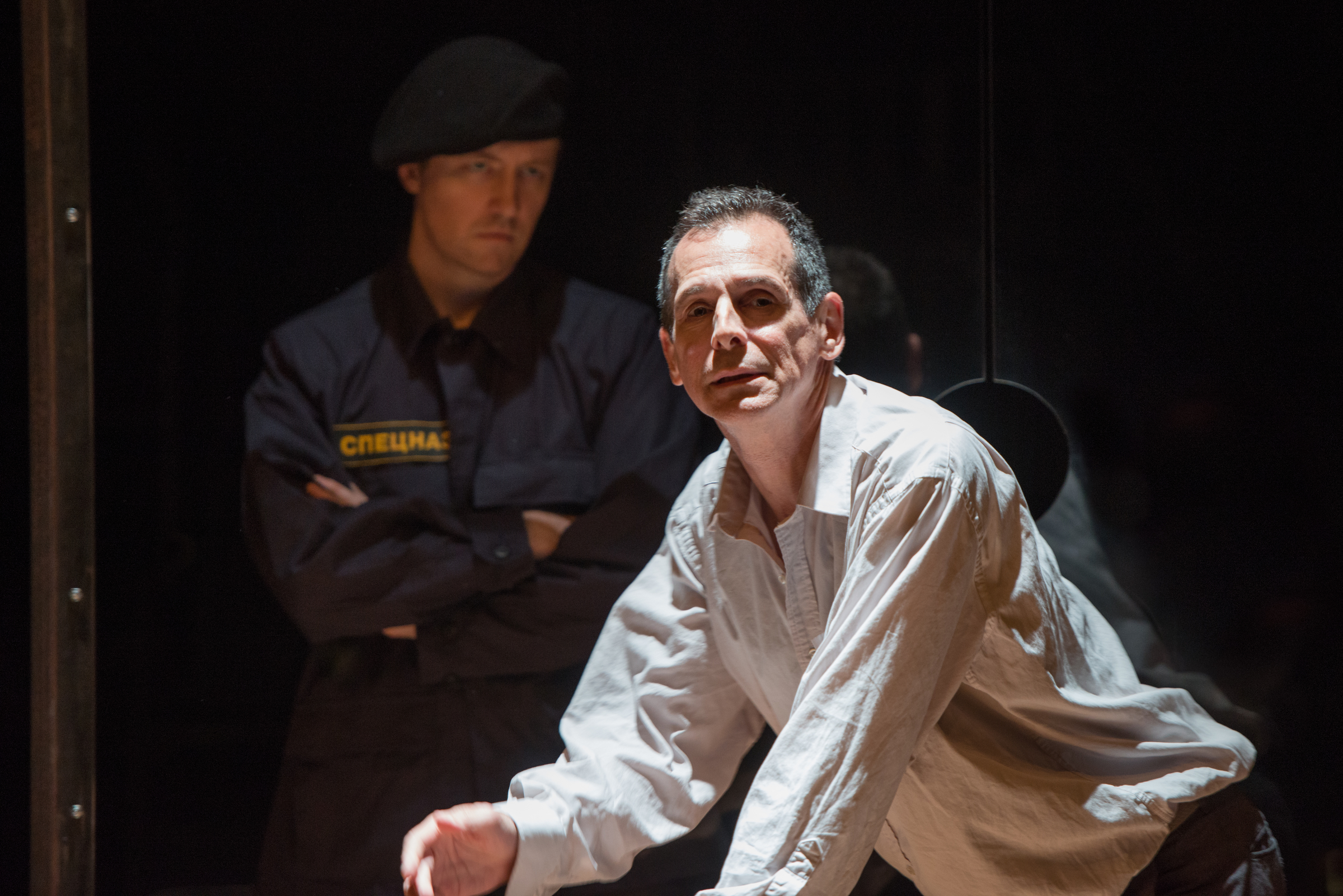
Cary Donaldson as Guard, T. Ryder Smith as Sergey • WE ARE PUSSY RIOT by Barbara Hammond • CATF 2015 • Photo by Seth Freeman
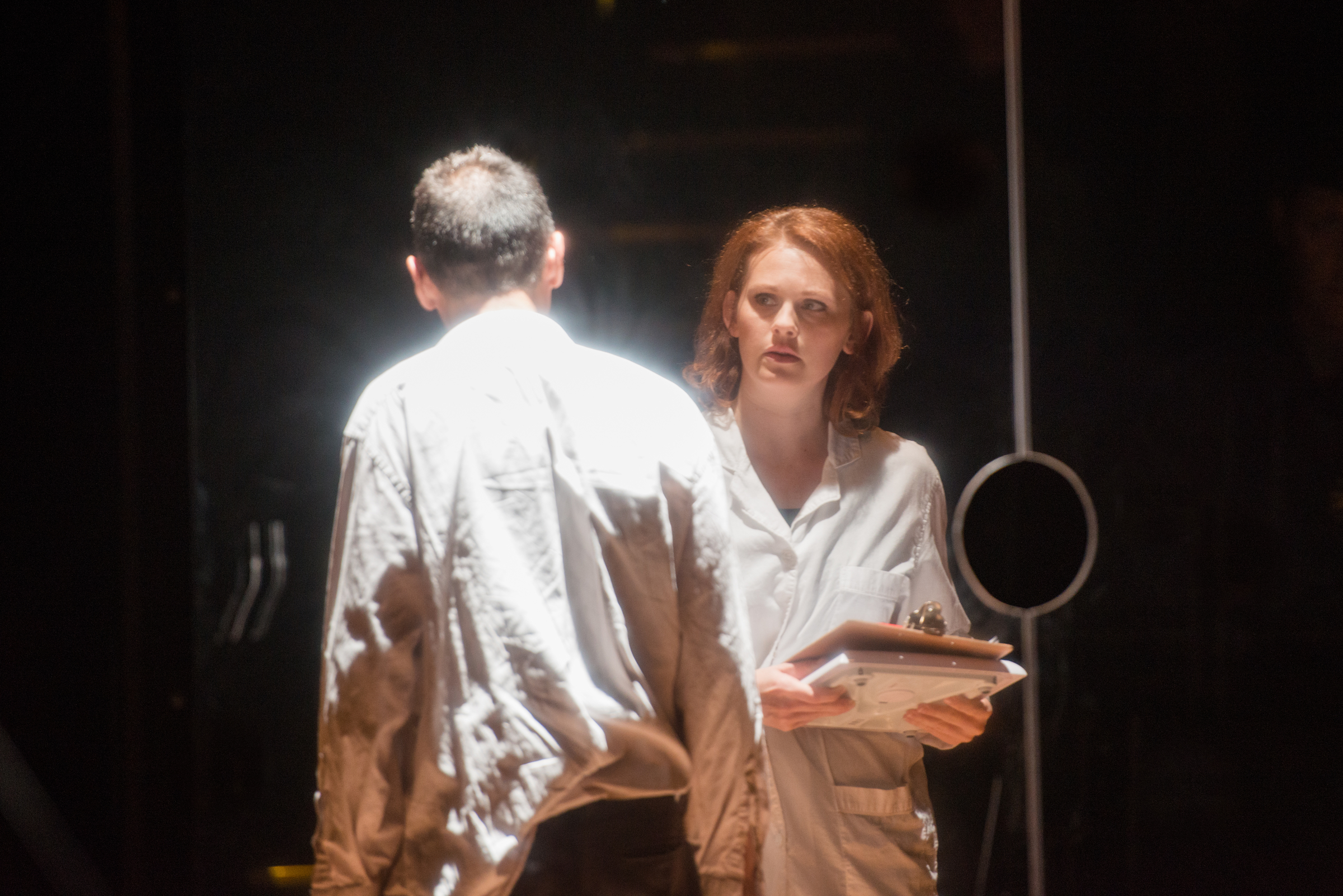
Sarah Nealis as Anna, T. Ryder Smith as Sergey • WE ARE PUSSY RIOT by Barbara Hammond • CATF 2015 • Photo by Seth Freeman